
SellTracking
SellTracking

Company
SellTracking is a comprehensive vehicle tracking system prepared for Vehis that uses GPS modules installed in vehicles to provide monitoring and tracking. The solution supports both individual vehicles and large fleets of vehicles. Thanks to SellTracking, employees receive real-time information about vehicle locations and fleet status, which makes it easier to maintain control and make accurate operational decisions. Information about the current location of leased vehicles is delivered in real time.
Vehis decided to migrate its stand-alone environment to an environment based on Kubernetes (k8s). This decision was driven mainly by performance and scalability challenges in the existing infrastructure. The entire infrastructure supporting SellTracking had become inefficient for such a large scale of vehicle tracking and fleet tracking. To improve performance and ensure infrastructure stability, the company chose to migrate to more powerful physical servers and implement Kubernetes using the RKE2 distribution.
GPS fleet tracking software
The goal was to build a stable and scalable fleet management platform that would maintain the quality of monitoring services even during rapid growth of the fleet of vehicles, while also enabling further expansion with new modules and functionalities. Such an architecture is essential when the solution is expected to support not only gps tracking, but also advanced monitoring of driving and operating parameters such as vehicle speed, engine RPM, and fuel consumption. Together with location, these data points form the basis for optimization, route planning, and assessment of driving style as well as compliance with company safety and cost policies.
The migration to more efficient physical servers and the implementation of Kubernetes with the RKE2 distribution made it possible to increase performance, improve stability, and ensure consistent operation of services in real time. This created a stronger technical foundation for gps fleet tracking, large-scale vehicle tracking, and the further development of the overall tracking solution.
Project goals
Increase the performance and stability of the SellTracking environment through migration to Kubernetes and preparation of infrastructure for large-scale gps fleet tracking software.
Ensure scalability as the number of vehicles grows, so that monitoring and real time vehicle tracking continue to work without interruptions.
Provide high availability of services for customers and employees, enabling ongoing monitoring and fast response in the event of failures, road incidents, or operational needs.
Kubernetes supporting tracking systems
A key part of the project was the design of a Proxmox cluster architecture on physical servers. The infrastructure consisted of 6 virtual machines and 3 clusters. The most important components included 3 master nodes, 3 worker nodes, and 3 database nodes operating independently outside the cluster. This arrangement provided stable resources for processing the stream of gps data and enabled more efficient load management, which is critical for systems delivering real time data to many users.
Database management became a priority, which is why PostgreSQL Patroni was used. This ensured high availability, integrity, and data security, while redundancy was strengthened by running instances in failover mode. In addition, three etcd servers acted as the coordination layer, supervising synchronization and leader election. This approach increased resilience to failures and reduced the risk of interruptions in monitoring, which is particularly important when a fleet of vehicles requires constant visibility into vehicle locations, route history, and driving parameters.
In operational terms, this Kubernetes environment became the foundation for a more scalable vehicle tracking solution and a stronger basis for gps vehicle tracking at scale. It supports continuous processing of gps tracking events and stable delivery of location tracking information for fleet vehicles and leased vehicles.
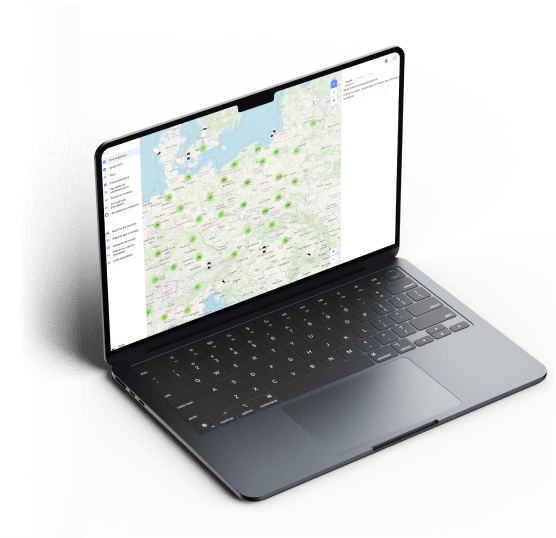
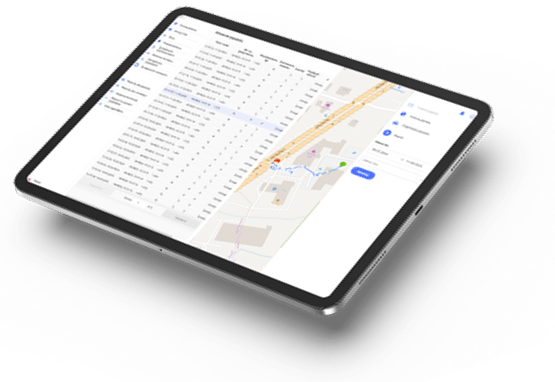
Microservices architecture providing full control in vehicle tracking device
The microservices architecture is based on running many service replicas in parallel, ensuring high availability and stability. Deploying multiple replicas makes it possible to maintain continuity of service even if one server fails, because the remaining instances take over the traffic. As a result, monitoring and vehicle tracking remain active.
This approach also supports further development of the platform with additional functions, such as automated alerts and notifications, analytics of driver behaviour, reports on fleet usage, and mechanisms that help identify savings in fuel costs and in the total cost of maintaining the fleet. In this context, the platform supports better fleet management, improved fleet efficiency, and more informed decisions based on real time data and historical gps data.
The architecture therefore strengthens the overall tracking systems environment and provides a scalable tracking solution for organizations that rely on continuous vehicle tracking, gps fleet tracking, and fleet tracking across large numbers of vehicles.
Challenges in vehicle monitoring
During the Kubernetes implementation, the Core Logic team faced migration challenges and infrastructure optimization under a high number of operations. While services were being moved, some jobs were queued, which required fast action and adjustment of environment parameters to the hardware specification.
An important element was Artemis as the queuing system, which had to be optimized for cluster deployment so that the transmission of gps data and processing of information about vehicles remained stable. In monitoring systems, maintaining the consistency of location data and telemetry is critical, because it directly affects operational control, fast response in the event of failures, and the reliability of historical data such as route history and speed readings.
These challenges are typical for large-scale tracking systems, especially where gps technology is used to support business-critical processes and where vehicle tracking and fleet tracking must continue without service disruption. The project therefore focused not only on migration, but also on making the infrastructure more reliable for future growth in fleet management and operational monitoring.
Results
- Kubernetes significantly improved the performance, key benefits, fleet operations and stability of the SellTracking environment, which translated into higher reliability of monitoring services.
- The implementation of Kubernetes made it easier to scale the infrastructure as the company grew and the number of vehicles increased, while maintaining gps tracking and real time vehicle tracking.
- The cluster provided support for business operations related to fleet management and vehicle tracking, giving full control over services and resources.
- The use of a PostgreSQL database cluster with Patroni strengthened the security, integrity, and continuity of data, including in the event of failure.
- The new infrastructure makes it possible to process approximately 1,000,000 frames per day containing information about vehicles such as location, driving parameters including speed, and operational events. This supports decision-making, optimization, route planning, and the real reduction of fleet operating costs.
- It improves reliability for fleet managers, supports better use of location data, and helps organizations manage a growing fleet of vehicles more effectively.
- The solution also creates the technical foundation for future growth of the fleet management platform, broader fleet management solutions, and continued improvement in operational efficiency.
- Where route data and driving parameters are analyzed, the platform can support assessment of driver safety, driver behaviour, and route planning based on optimised routes.
- Where route data and driving parameters are analyzed, the platform can support assessment of driver safety, driver behaviour, and route planning based on optimised routes.
- It can also support analysis related to fuel usage, fuel consumption, and overall operating costs, helping companies save money and improve fleet-level decisions.
- In a broader sense, this makes SellTracking a scalable vehicle tracking solution and a strong base for future fleet management software development.