
AnyTaxi
AnyTaxi

Company description
AnyTaxi is a company operating in the passenger transport business. It works with major taxi apps and mobility platforms such as Uber, Bolt and FreeNow. Its business model is based on managing a fleet of cars and supporting a team of drivers who complete trips in different cities in Poland.
As a fleet partner, AnyTaxi needed a tool that would help organize data from multiple sources, improve driver settlement processes and give managers better access to information about daily fleet operations. In this type of service, accurate reports, timely payment preparation, cost control and efficient cooperation with transport platforms are particularly important.
Project – billing panel for taxi companies and taxi driver settlement system
The project involved creating a web-based solution supporting the automation of settlements based on data collected from Uber, Bolt and FreeNow. The system aggregated trip information, linked user identifiers from the platforms with AnyTaxi’s employee records, and then calculated the amounts due to drivers.
The final result of the system was a file prepared for the HR department, which could be used as the basis for payroll preparation. As a result, the company received a simple way to collect data from different sources, organize it and pass it on to the next HR and financial process. The billing panel for taxi companies was designed for fleet partners that need greater transparency in finance, fleet operations and reporting.
Project goals
The goal was to deliver a web panel automating key stages of settlements based on data from Uber, Bolt and FreeNow.
The project was designed to increase the efficiency of operational and HR teams by reducing manual processing of reports, documents and data from many sources.
Another goal was to consolidate information about trips, drivers, payouts and liabilities in one system available to managers.
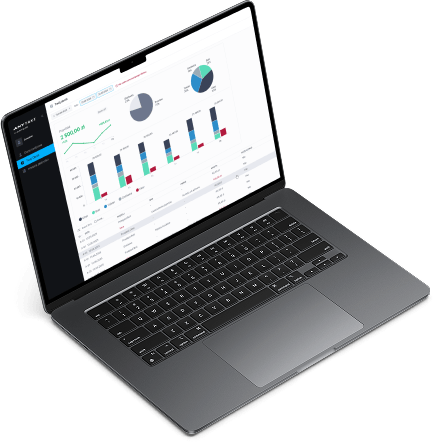
Automated taxi driver settlements in the transport business
In the transport business, operational data is spread across different platforms. AnyTaxi used Uber, Bolt and FreeNow, and each of these taxi apps provided information in a different model. In the case of Bolt, integration through API was possible, while for Uber and FreeNow the process was mainly based on reports downloaded by a manager and uploaded to the system.
Without a dedicated tool, the settlement process was time-consuming and prone to errors. The manager had to download reports, compare data, assign trips to the right drivers and prepare information needed for payouts. For fleet partners, this meant a large amount of administrative work and limited control over what was happening in the company.
Implementing settlement automation reduces errors related to manual salary calculations, which increases financial accuracy and transparency in transport companies. The purpose of the implementation was to create a solution that could connect data from several platforms in one place. Taxi fleet management requires monitoring operational costs, which may lead to savings of up to 30% annually. Introducing process automation in fleet management may save fleet partners an average of 20 hours per week.
Web billing panel for fleet partners
The central element of the project was a web billing panel for fleet partners, which enabled importing, processing and analyzing trip data. The system connected identifiers from Uber, Bolt and FreeNow with drivers stored in AnyTaxi’s database.
This allowed the company to check which trips were completed by specific drivers, what amounts were due to them and which sources the data came from. The panel helped organize information that previously required manual handling and work with external reports.
For fleet partners, it was especially important that all key details were available in one place. The manager did not have to analyze each platform separately, because the panel collected data, processed it and prepared it for further use.
Uber, Bolt and FreeNow integrated in one taxi settlement system
Managing multiple taxi apps, including Uber, Bolt and FreeNow, in one panel increases the efficiency of fleet management. One of the most important assumptions of the project was to combine data from Uber, Bolt and FreeNow in one place. AnyTaxi operated on several platforms at the same time, so settlements required collecting information from different systems and converting it into a shared format.
The Bolt integration was based on API, which enabled automatic data collection. In the case of Uber and FreeNow, the manager downloaded reports from external panels and then uploaded them to the solution created for AnyTaxi. After import, the system processed the data, updated the database and prepared the information needed for settlements.
The project scope included handling data from three key platforms: Uber, Bolt and FreeNow. The solution made it possible to organize data from apps that previously operated separately and required manual work.
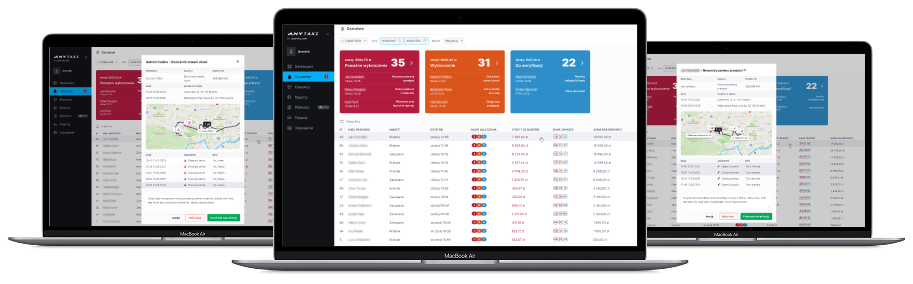
Automation of driver settlements and payment reports
Settlement automation systems make it possible to generate accurate financial reports for the entire fleet with one click, significantly speeding up accounting processes. The system analyzed imported reports, assigned trips to the right drivers and calculated the amounts needed to prepare payments.
The settlement process did not take place fully in real time, because part of the data came from files periodically downloaded by the manager. This was consistent with AnyTaxi’s operating model and the availability of data on the platform side. At the same time, automation significantly reduced manual work on the company’s side.
The result of the process was a file for the HR department, which served as the basis for payroll preparation. Thanks to this, payment-related formalities could be completed faster, and managers gained greater confidence that the data came from an organized source.
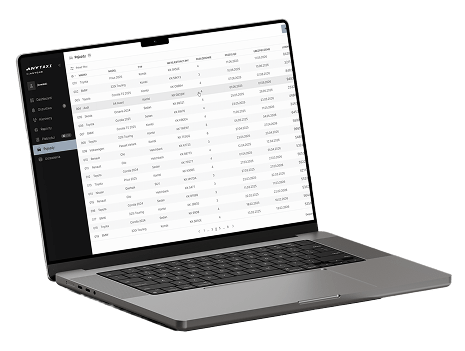
Fleet management, drivers and operational work
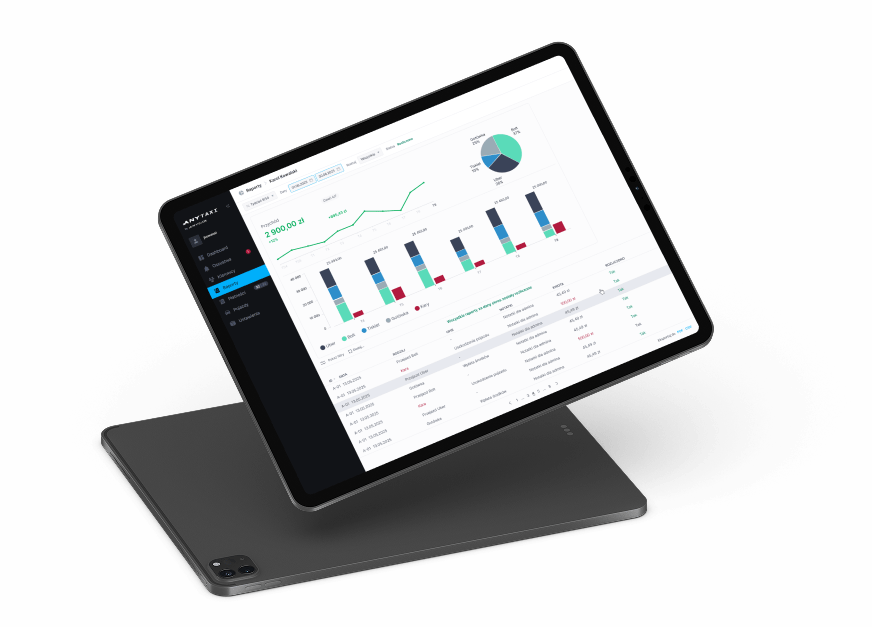
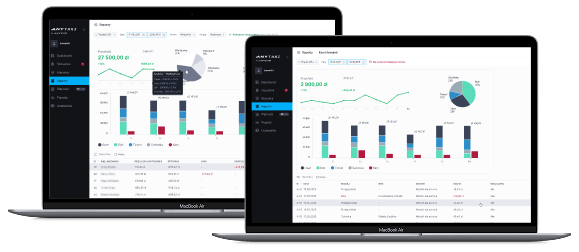
The panel supported fleet management by collecting financial and operational data in one environment. Managers could analyze results by city, car type, day of the week and hours of highest demand.
This solution made it easier to understand where the company generated the highest income, which areas of the business were the most effective and when demand for rides was the highest. In practice, this meant greater control over daily work and the ability to make decisions based on data.
For fleet partners, this type of function is important because it helps analyze costs, car usage, income from individual platforms and the efficiency of drivers. This is especially important for companies that operate a larger number of taxis or cabs and work in several cities.
Taxi driver fraud detection system and greater fleet control
As part of the project, a module for detecting potential abuse was also prepared. Its purpose was to identify situations in which a car may have been used for a commercial trip outside the official platforms.
The mechanism was based on integration with telemetry devices and the CAN bus installed in vehicles. The system collected data on location, door opening and closing, and in selected cases also information about fastening or unfastening seat belts.
On this basis, it was possible to compare vehicle activity with reports from Uber, Bolt and FreeNow. If telemetry data indicated a potential trip that was not reflected in the official reports, such an event could be marked as suspicious and sent to the manager for verification.
For fleet partners, this type of taxi driver fraud detection system means an opportunity for greater control over fleet usage, fuel consumption, vehicle mileage and potential abuse. In the case of AnyTaxi, the module was technically prepared, but at the described stage of the project it was not yet actively used by the client.
Telematics, CAN and IoT integrations
An important element of the project was integration with telemetry devices and CAN systems. AnyTaxi had vehicles equipped with this type of technology, which made it possible to collect data directly from cars.
The system was designed not to be limited to a single telematics provider. The solution could integrate with different external services and systems, increasing its flexibility. For fleet partners, this is important because transport companies often use different devices, platforms and tools at the same time.
IoT integrations made it possible to connect financial, operational and fleet data. As a result, the panel was not only settlement software, but also a basis for further development of analytical functions, vehicle control and fleet support.
Results
- AnyTaxi received a billing panel for taxi companies that organized data from Uber, Bolt and FreeNow.
- The system enabled automatic assignment of trips to drivers and calculation of amounts needed to prepare payouts.
- The company gained one place to import reports, analyze data and prepare a file for the HR department.
- The analytical dashboard increased transparency of data related to cities, car types, peak traffic hours and operational results.
- The prepared fraud detection module created a basis for identifying potentially suspicious events using telemetry and CAN data.
- IoT integrations showed that the solution can also be developed toward vehicle control, cost analysis and advanced fleet management.