
Kathrein Solutions
Kathrein Solutions
Company
Kathrein Solutions is a renowned German company with a deeply rooted tradition and a pioneering role in the production of radio antennas in Germany. Over the years, the company expanded its business into electromobility and ev charging infrastructure, strengthening its cooperation with companies such as Ericsson and Nokia. Among the companies belonging to the Kathrein Group is Kathrein Solutions GmbH, which specializes in the production of modern ev chargers and charging stations for electric cars and other electric vehicles.
The company is headquartered in Rosenheim, Bavaria. KATHREIN Solutions GmbH focuses on the production of various types of ev chargers, with an emphasis on AC devices such as wallboxes and intelligent AC chargers for electric cars and other ev applications. Its customers include private homeowners, hotels, companies, and parking operators who want to offer ev charging as part of modern services for their users. In this context, the company develops solutions that support private and internal ev charging network scenarios rather than broad public ev charging or open charging networks.
EV charging management software platform
We created a mobile app for operating ev charging stations, enabling management of the charging process for both the end user and the operator of the ev charging infrastructure. The app for charging electric vehicles allows users to plan and monitor charging time, ensuring optimal use of energy resources and full control over charging sessions.
The project was designed as a software platform for ev charging, intended to support a more convenient and more efficient charging process. It gives both users and operators the ability to manage charging sessions in a smarter way and contributes to a better ev charging experience. At the same time, it creates a strong basis for future proof development of internal ev charging network environments.
Project goals
Deliver a digital transformation that makes it easier for customers to use ev charging stations through a modern and intuitive mobile app for ev charging.
Increase the efficiency and convenience of the charging process for private users and companies using electric cars and other ev solutions.
Enable users to flexibly plan and supervise the charging process, including the control of charging time, power, and energy costs.
Ensure effective integration of the mobile app with the charging station system, including the backend and charger software, so that communication and full control over the charging process are possible.
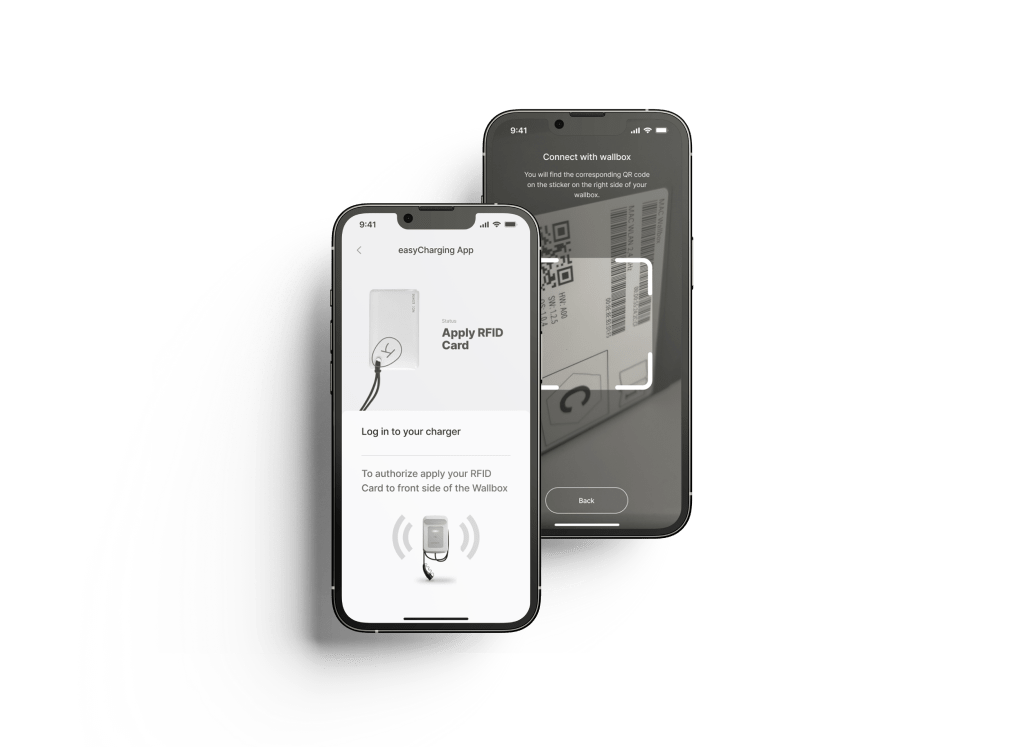
Key capabilities of the mobile app for operating EV charging infrastructure stations
The company’s management wanted to carry out a digital transformation by making it easier for customers to use ev chargers and modernizing the existing processes. Customers now gain the ability to connect their electric car to a charger without the need for a physical token, which is still a traditional solution in many ev charging network and charging networks environments.
The app works within an internal network, or private charging network, which means that using the stations does not generate fees related to public charging and does not require integration with external operators of charging networks. This is an ideal solution for companies and hotels that want to offer ev charging as an additional service, either without charging users or while defining their own billing and payments model. This approach gives the customer more control over its own business rules and helps manage an internal ev charging network more efficiently.
The first use of the service requires one-time validation through an RFID reader. After that authorization, however, users can use the charging station through the mobile app, eliminating the need for a physical token. We implemented charging authorization through QR code scanning, allowing users to start a charge session with a smartphone directly at the charge point. This not only improves convenience for ev drivers, but also removes potential problems related to losing an RFID token and simplifies the operation of the whole ev charging system.
This one app approach gives drivers easier access to the charge point, reduces friction, and supports a more seamless ev charging experience. It is also a more future proof way to connect users, chargers, and services within a closed network.
Challenges
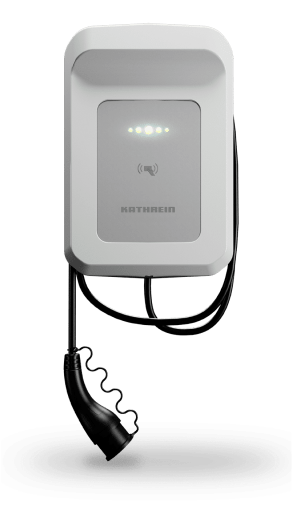
The project required not only building a new mobile app for charging station operation, but also transforming the entire existing system located inside the charging station itself. This challenge emerged during the project, and the need to improve the embedded software became an additional step. The existing embedded software had not originally been designed to cooperate effectively with a new ev charging app. This required code modifications on the device side.
We created a new independent component that controlled charging processes and supplemented the missing functionalities related, among others, to user authorization, RFID handling, and communication with the mobile app. This component became a key part of the overall ev charger software layer and helped manage the interaction between the station and the application.
An additional challenge was the use of the limited resources of the charging station system. Insufficient RAM and limited processor computing power required flexibility, code optimization, and very efficient resource management. All solutions had to be designed to work reliably on hardware with limited capabilities, while still ensuring stable operation of ev chargers and the wider ev charging infrastructure.
These constraints made scalability, reliability, and efficient use of energy and device resources especially important. The project therefore had to balance performance with the practical needs of the customer’s business operations and the long-term future development of the platform.
Solutions

For the Kathrein Solutions GmbH project, we used Flutter. Flutter makes it possible to write one codebase that can be adapted to different platforms such as Android, iOS, and a web interface. This not only saves time, but also significantly reduces costs, since there is no need to create separate native solutions for each platform. One cross-platform app means one code source serving all end-user devices that use the ev charging stations.
This software platform approach supports easier maintenance, helps manage the product lifecycle more efficiently, and provides a more future proof foundation for further ev charging services. It also ensures that the same app can support customers across different usage scenarios with consistent quality and a better ev charging experience.

We also developed charger software using Go Lang. The implementation of this technology proved crucial to successfully achieving the project goals. The use of Go Lang made it possible to optimize all processes related to charging the electric car and communicating with the AC charging station. The system acts as an API for the mobile app and is the foundation for the entire interaction between the charging station and the application.
Key functionalities such as starting and ending the charge, RFID card integration, QR code handling, and retrieval of statistical data on energy consumption were implemented in Go Lang, which made it possible to publish them as a stable API available to the mobile app and operator panels. Our approach enabled easy connection and effective use of charger functions in different scenarios, from a private home to a company parking area.
This architecture supports ev charging management software goals by combining device-level control, software efficiency, and stable integration into one coherent platform. It also helps customers and operators manage chargers, sessions, and related payments, billing, and reporting logic more effectively.
Charging station operation without physical tokens
The operator has a broader range of permissions, including creating user accounts by registering RFID cards. After an RFID card is added by the operator and activated by the customer, the user can log in as a regular user. This makes it possible to use ev charging stations in a simple and secure way. The app gives full control over the charging process, making it possible to plan charging or start and stop it immediately with a smartphone, both for chargers installed in private homes and on company parking sites.
Administration of the application is intuitive and adapted to the needs of users and operators of charging stations. Advanced statistical and reporting functions make it possible to analyze the costs of consumed energy in detail, presenting data over months, days, and weeks. Users also have access to information on power draw, the amount of consumed kilowatt-hours, charging history, and the costs related to charging an electric car.
These functions support better energy management, stronger operational control, and a more informed approach to payments, billing, and internal settlements. They also create practical benefits for both users and business customers, who can manage their internal charging network with less effort, in less time, and with better visibility into costs and usage.
Artificial Intelligence and Kubernetes
Additionally, artificial intelligence and Kubernetes were applied in the server layer of the system, which made it possible to scale services intelligently, improve load management, and ensure high availability of the solution in the production environment.
This helped the platform become more future proof, improved scalability, and supported more reliable ev charging services at scale. It also gave the customer a stronger basis for future business development, wider service rollout, and long-term operational efficiency. In this way, the solution is better prepared for the future of ev charging networks, internal charging networks, and expanding ev charging infrastructure.
Results
- The mobile app built with Flutter makes it possible to use one code source for Android and iOS, ensuring a consistent user experience when operating ev charging stations.
- Effective integration of the app with the charging station software makes full control over the charging process from a smartphone possible.
- The use of Go Lang to optimize the resources of the charging station system ensures smooth operation of devices even with limited computing power and RAM, which is crucial for the reliable work of ev charging infrastructure.
- Advanced statistical and reporting functions allow users and operators to analyze the costs of consumed energy, charging history, power consumption, and other parameters in detail, supporting effective management of the ev charging network and better business decisions.
- In practical terms, the project delivered a strong basis for ev charging management software, reliable ev charger software, and a scalable software platform for internal ev charging use.