
Albawings
Albawings

Company description
Albawings was an Albanian airline operating passenger services on domestic and international routes. Founded in February 2015, the airline introduced its first aircraft, a Boeing 737-500 named “Spirit of Tirana.”
To meet growing customer expectations and changing market demands, Albawings invested in its own flight booking system and airline reservation system, designed to support both mobile and web users. The goal was to simplify flight booking, improve the overall customer experience, and provide passengers with convenient access to services and information at every stage of the journey — from flight search and route selection to online check-in, boarding, and post-purchase support.
Although Albawings ceased operations on January 12, 2024, the project remains a valuable example of how airlines can build a competitive advantage through technology, a well-designed booking engine, and modern automation systems tailored to the airline industry.
Flight booking system
The project involved the creation of a modern flight booking platform based on a proprietary solution supporting airline ticket booking, reservation handling, and ancillary services. The system was designed to work quickly, reliably, and intuitively on smartphones and tablets, while also functioning as a responsive web-based airline booking system, flight booking engine, and scalable booking engine for online reservations.
Customers could complete the full booking journey in one place: search for flights, compare offers and fares, choose ticket options, and make payments by credit card or other available methods depending on the market and route. The platform supported both individual and corporate users, enabling flight reservation requests for one-way, round-trip, and selected flexible travel scenarios. The entire flight booking process and flight reservation process was designed to simplify passenger reservations, ticket reservations, and self-service airline reservation.
For customers looking for the best deals on low-cost flights, it was essential that the entire booking flow remained short, transparent, and optimized for mobile devices. Access to services such as baggage, carry-on baggage, seat selection, meals, and insurance was clear and easy to understand, with no unexpected fees appearing at the final step.
From the operational perspective, a dedicated administration panel was also developed so employees could manage routes, bookings, and service availability in real time. This approach supported reservation management, inventory management, and inventory management solutions, including seat availability monitoring and control of overall airline availability.
Project goals
To provide a comprehensive reservation platform for individual and corporate customers, combining airline ticket booking, flight operations, and ancillary services within one consistent reservation system and airline reservation system.
To improve platform usability and performance through optimized UX/UI and a mobile-first approach for both app and web, making booking flights, booking tickets, and the overall flight booking experience more convenient for modern travelers.
To enable secure airline ticket purchases, credit card transactions, and full online check-in with boarding pass generation before departure, supported by online payment, payment gateway integration and booking confirmation.
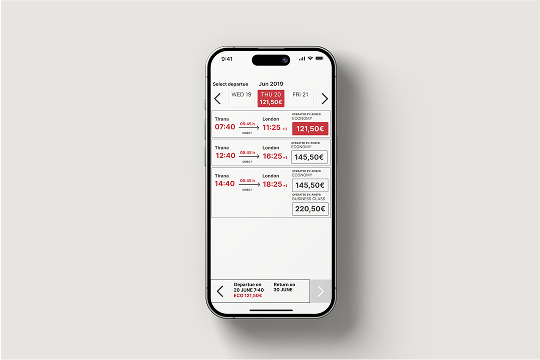
Airline reservation system
As part of the project, a responsive RWD web application was developed, allowing customers to book and purchase tickets, browse routes, check departure and arrival airports, choose flights, and modify existing reservations. The system supported seat selection, onboard meals, extra baggage, carry-on baggage, and additional passenger options, including reservations for animals.
It functioned as a modern airline website integrated with a robust booking engine, making flight reservation, ticket booking, access to flight schedules, airline schedules, and a flexible multi city search option available in one place. This made the platform useful not only for direct customers but also as a scalable digital solution aligned with the needs of a growing airline business.

A key feature was reservation change handling. Users could edit their travel dates, change flights, and in selected cases request a refund or ticket exchange. This increased flexibility and gave passengers more control over their booking. The application also supported online check-in: passengers could enter their data and travel documents and then generate a boarding pass directly in the system, reducing airport processing time and simplifying boarding.
The solution also supported access to current flight information, flight status, and integration with a departure control system and integrated departure control system, which improved operational visibility and passenger service quality.
CMS panel
Alongside the booking platform, a CMS panel was created as a tool for managing content, pages, and sales parameters. Employees could add new routes, enable and disable connections, edit information displayed to customers, and configure ancillary services.
An important feature was the ability to define payment methods depending on market and destination, while also monitoring the availability of services such as extra baggage, onboard meals, and selected optional products. The panel acted as an operational extension of the reservation system, supporting customer management, analysis of flight data, and optimization of internal processes across the travel business.
As a result, the operational team could continuously optimize offers and pricing, respond quickly to demand, and maintain information consistency across the application and website. This improved the customer experience, supported more efficient internal workflows, and reduced manual workload.
The platform also supported service teams in verifying booking details, reviewing change history, and contacting passengers by email when additional confirmation was required. From an organizational perspective, the tool shortened response times and improved coordination, which is critical in the airline industry. Additional agent control modules supported customer management, ticket verification, booking oversight, and operational task distribution.
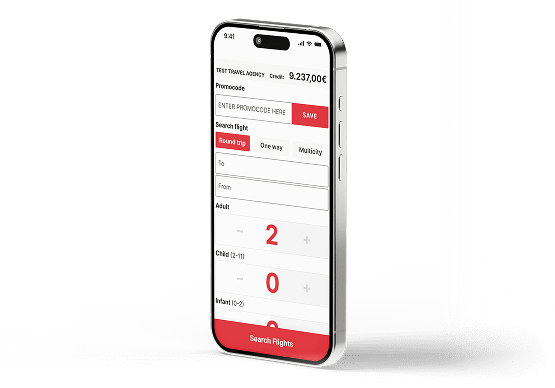
Airline ticket reservation system
From the user’s perspective, the solution was designed so that most steps could be completed on a single page within a clear, structured layout. Pricing, fare conditions, and ancillary options were presented transparently before final payment, helping users understand what they were selecting and whether additional fees applied.
From a marketing and product perspective, the system also supported the presentation of offers, promotions, and discounts, which is especially important for low-cost carriers and travelers planning another European trip, for example to Greece, departing from Warsaw or other regional airports.
The platform supported internet ticket sales, direct booking, and the sale of airline tickets through a transparent and efficient flight booking flow. It was particularly useful for customers comparing offers across airlines, online travel agencies, travel agencies, and travel agents while still expecting a direct, reliable booking experience from the carrier.
Challenges
One of the main challenges was integration with iFlyRes, an advanced reservation solution developed by IBM. This required detailed analysis, adaptation of the integration layer, and infrastructure preparation to ensure that the Albawings platform remained compatible with the wider airline technology ecosystem while delivering stable performance under heavy traffic.
It was also essential to maintain data consistency and real-time availability so that bookings, changes, ancillary services, and check-in information remained visible to both customers and staff without delays. The project included integration with global distribution systems, multiple GDS systems, and readiness for third-party supplier integration, which is highly relevant for the airline industry, travel companies, and the broader travel sector.
In projects of this kind, interface clarity is as important as technical performance, because users naturally compare the experience with leading brands such as Air France, Ryanair, or SWISS. For that reason, strong emphasis was placed on readable search results, understandable booking conditions, and a predictable payment flow. It was equally important that users could submit a search request directly and quickly reach relevant results, while the booking engine displayed current flight schedules, seat availability, and fare conditions in a clear way for airline customers and distribution partners.
Results
- Creation of a responsive, mobile-first flight booking system supporting flight reservations, airline ticket purchases, and both one-way and round-trip travel.
- Improved customer service through an intuitive interface, optimized UX/UI, and a complete flow covering flight search, selection, reservation, and payment by credit card.
- Increased operational efficiency thanks to the integrated CMS panel, which enabled route, pricing, and ancillary service configuration while monitoring availability in real time.
- Better support for reservation management, inventory management, and internal processes designed to improve automation and team coordination.
- Higher passenger satisfaction through online check-in, boarding pass generation, baggage management, transparent pricing, and easier access to passenger and booking data.
- Stronger competitive positioning in the low-cost airline segment through modern technology and a mobile-first approach to travel planning and digital airline services.
- The project demonstrated how a well-designed travel software solution, combining a modern airline reservation system, scalable booking engine, and operational automation tools, can support airlines in digital transformation, improve efficiency, and deliver a better customer experience across multiple distribution channels.