Blue Panorama
Blue Panorama

Company description
Blue Panorama was an Italian charter airline operating in the air travel sector and serving passenger traffic on international routes across Europe. The carrier operated a fleet of 12 aircraft and served 41 routes, providing extensive connections between airports in many regions. In 2019, the company joined the Luke Air group, and in 2021 it suspended operations for financial reasons.
In a market where customers increasingly choose low-cost flights, compare flight prices and airline offers, and expect a simple way to buy airline tickets on desktop and through web or mobile applications, having a proprietary reservation system became essential. A modern airline reservation system supporting ticket sales and passenger service in one place was therefore a key business asset for companies competing in the airline and travel industries.
12
planes
Luke Air
group member
Airline reservation system
The company’s previous system was license-based rather than proprietary, which meant employees had limited ability to introduce changes or adapt functions to user and operational needs. The goal was to replace it with a platform designed from scratch around the real flight booking process, improving usability, performance, and flexibility while delivering a modern, responsive UX/UI.
In the low-cost airline segment, it is crucial for a flight booking system to support fast flight search, efficient ticket booking, and seamless airline ticket purchases without unnecessary steps, with transparent pricing and no surprise fees.
The Blue Panorama project involved creating a complete booking system and sales platform for both B2C and B2B customers, including cooperation with partners, sellers, and distribution channels that reflected agency sales and support for travel agencies. The system enabled fast route and connection search, selection of one-way or round-trip travel, purchase of flight tickets with a clear summary of prices and services, and payment by credit card as well as predefined settlement methods for corporate customers. It was designed as a scalable airline booking system and a flexible solution for different customer groups.
A key objective was to reduce situations in which users were surprised by additional charges, so the project focused on transparent pricing and logical upselling of services such as baggage, cabin baggage, seat selection, meals, and insurance. The system was also intended to improve change handling, including delay-related scenarios in which a passenger could modify a flight and, in specific cases, initiate a refund or exchange with clear booking confirmation.
Project goals
To provide a comprehensive solution for employees and customers, covering a flight reservation system, ticket sales, and ancillary service handling in one integrated airline reservation system.
To enable airline ticket purchases and online check-in, including boarding pass generation before departure, supported by the appropriate departure control system logic.
To deliver an efficient and intuitive web-based customer service platform optimized for search, reservation, payment by credit card, and flight changes, improving the end-to-end flight reservation process and overall booking experience.
Airline booking system
The web application for individual customers delivered core functions that shortened the purchase path: searching routes and connections, selecting a flight, and then reserving and purchasing airline tickets based on parameters such as departure date, return date, and available fares. The platform supported flight search, ticket booking, and a streamlined booking process from start to finish.
Users could add services that strongly influence travel comfort, including seat selection, onboard meals, baggage type, cabin baggage, and even animal transport, which can be critical for some passengers. As a result, the platform worked not only as an airline booking system but also as practical airline ticketing software for managing ancillary sales and travel options in one interface.
The system was designed so that customers always saw transparent costs and were not surprised by additional charges, which had a direct impact on conversion and ticket sales. An important element was online check-in, through which passengers entered their personal data and travel documents and then received a boarding pass ready for use at the airport, reducing service time and making boarding easier.
The system also covered booking modifications, and in situations such as flight delays the customer could perform operations in line with the carrier’s rules, including starting a refund or exchange process. This supported flight reservations, displayed relevant flight details, and improved the overall customer experience.
The web panel was also used by corporate customers purchasing larger numbers of flight tickets. The purchase flow was similar to B2C, with the difference that companies had dedicated accounts and predefined payment methods. This simplified settlements and cooperation with partners, offices, and sellers in the B2B model, including travel agents, travel agencies, and selected tour operators. In this sense, the platform functioned as a complete solution for both retail and business sales.

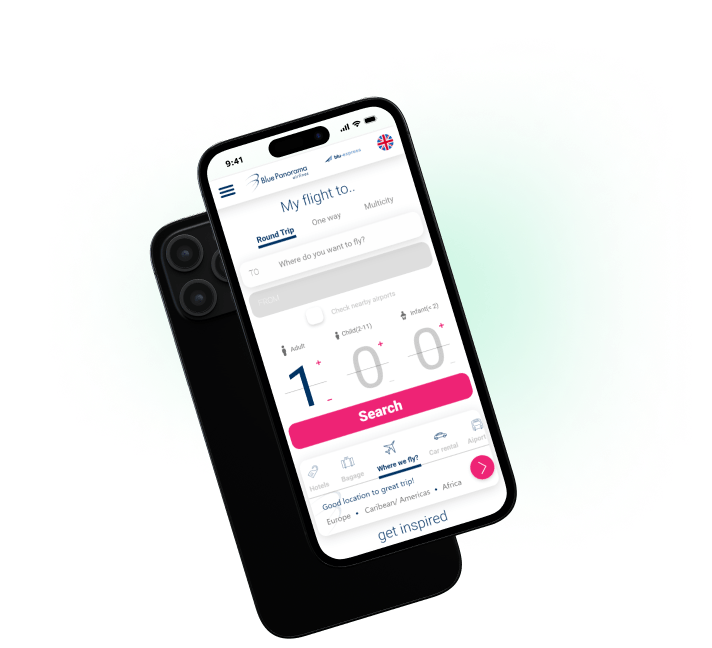
Airline ticket booking system
The web system was responsive and optimized for smartphones and tablets, allowing users to book a flight, purchase tickets, and complete the entire journey just as conveniently on mobile devices as on desktop. This mobile-first approach was especially important in the low-cost segment, where customers search for cheap flights, compare carriers, and want to finalize online bookings quickly and without unnecessary steps.
The mobile version supported the same flight booking process, ticket booking, and direct booking journey as the desktop experience, making the platform a practical online airline booking system.
Online check-in in the mobile version included entering personal data and travel documents, which were then processed by the system before a boarding pass was generated. This improved the traveler’s experience already at the pre-departure stage. As a result, users had all key travel elements in one place, and quick access to reservation data and services reduced the number of questions directed to customer support.
The solution also supported flight status, current flight schedules, and fast access to relevant booking information through web and mobile applications.

CMS
With the CMS, employees could manage content in the web panel and enable or disable specific routes available to customers, making it possible to react quickly to seasonality and changes in the route network. The system also enabled the configuration of ancillary service availability, such as baggage, cabin baggage, and selected onboard options, as well as the definition of payment methods for specific routes.
Thanks to this, the operational team gained more flexibility than in the previous licensed solution, while current offers and prices could be published more efficiently. This improved communication around special offers and discounts and reduced the workload of service teams and office staff. From an operational perspective, the CMS supported the internal booking system and selected inventory management processes.
In addition, a dedicated CMS was created so the team could manage content and routes without involving developers, keeping information and available options updated in real time. This improved the overall booking process, supported passenger reservations, and strengthened the company’s reservation capabilities.

Integration
The system was designed to ensure consistent delivery of booking and service data across the entire customer journey, while key elements such as flight availability, ancillary services, and check-in status could be viewed in real time. Integrations also supported credit card payments and settlements for corporate accounts, which was important for partners and sales channels, including travel agencies.
In addition, as part of cooperation with the sister company Albawings, a similar passenger service platform was prepared with that company’s branding and operational requirements in mind. This made it possible to reuse proven components and expand the solution in a multi-brand model within the airline sector.
From both a technical and business perspective, the platform was designed to work with global distribution systems, support data exchange through standardized messaging, and remain compatible with the realities of the airline and travel industries. This is important when airlines need access to indirect distribution channels and smoother collaboration with partner airlines and external intermediaries.
The architecture also supported payment gateway integration, improved sales operations, and helped automate internal travel business processes across the organization.
Albawings
A similar passenger service platform was also created for the sister company Albawings, adapted to its branding and operational requirements.

Challenges
The client had previously used a system that needed to be replaced with a new one, and the management team required that all functionalities from the previous platform be transferred, improved, and extended with additional features. The biggest challenge was designing and building all components so that they matched the scope of the previous system without full knowledge of that platform, while also delivering modern UX/UI and better performance.
This required careful mapping of functions typically associated with a computer reservation system, enterprise reservation systems, and a modern booking engine.
An additional challenge was maintaining process consistency for individual customers, corporate users, and B2B channels, where fast search, a predictable purchase flow, transparent payment, and clear conditions are essential because users compare the experience with other airlines such as Ryanair, SWISS, or Air France.
In practice, this meant designing journeys so that one-way and return reservations were equally simple and passengers clearly understood which options they were choosing and what costs they were accepting. The project therefore had to support airline reservation, ticket reservations, and booking flows in a way that reflected how direct airline distribution works, while also supporting agencies, travel agents, and the broader travel business ecosystem.
Results
- Increased sales of airline tickets and improved use of B2C and B2B channels, including travel agencies, business partners, and selected travel agents.
- Higher website conversion thanks to better performance, clearer UX/UI, and simplification of the flight booking process.
- Reduced pressure on the call center by enabling self-service for reservations, flight changes, ancillary services, online check-in, and booking confirmation.
- Reduced workload for customer service teams and faster delivery of passenger information thanks to automation and data consistency within the booking system.
- A hybrid application and responsive airline website supporting flight booking, allowing users to reserve low-cost flights, buy airline tickets, and access their travel data in one place.