
Express
Express
Company description
Express is one of the largest car rental companies in Poland and has been operating since 1996. The company manages a fleet of thousands of vehicles available at dozens of locations across the country, ensuring high vehicle availability in many cities and regions. Express offers flexible rental options for days, months, and years, while also developing new services such as flexible vehicle rental. Operating at this scale requires a modern and reliable digital environment capable of supporting online reservations, customer service, and internal workflows within a single system, with a strong focus on security, performance, and day-to-day process optimization.
27 years
on market
14 000
vehicles
93,51
NPS indicator
35 000
business customers
Car rental reservation system
The project for Express, delivered by Core Logic, began with the creation of a new website and the redesign of a core business area: the car rental reservation system. The previous Express platform, built in PHP, no longer met growing business requirements and did not adequately support the scaling of processes such as reservation handling, booking management, vehicle availability presentation, pricing, or real-time data integration.
Core Logic began working with Express in 2017 and proposed a modern solution based on ReactJS, TypeScript, and Java, a technology stack that ensured better scalability, stronger security, and higher efficiency. At that time, ReactJS and TypeScript were only beginning to gain broader popularity, but the decision proved highly effective. It enabled smoother implementation, reduced delivery time, and improved the experience of both customers and internal users. The final result was a modern website and rental platform tailored to the needs of both the company and end users, supporting online reservations from anywhere and on any device, while also extending the operational capabilities required by internal teams.
For Express, this was not just a redesign project, but a strategic upgrade of the digital foundation of a large vehicle rental business. The new environment functioned as a scalable software ecosystem designed to support growth in a demanding and competitive market.
Project goals
Deliver a comprehensive solution for employees and customers, covering the car rental reservation system, reservation handling, and internal process management in one place.
Drive digital transformation through better customer communication, greater automation, and reduced manual work.
Create a high-performance and intuitive website for reserving vehicles, ensuring a fast booking flow and support for online payments.
Car rental software solutions
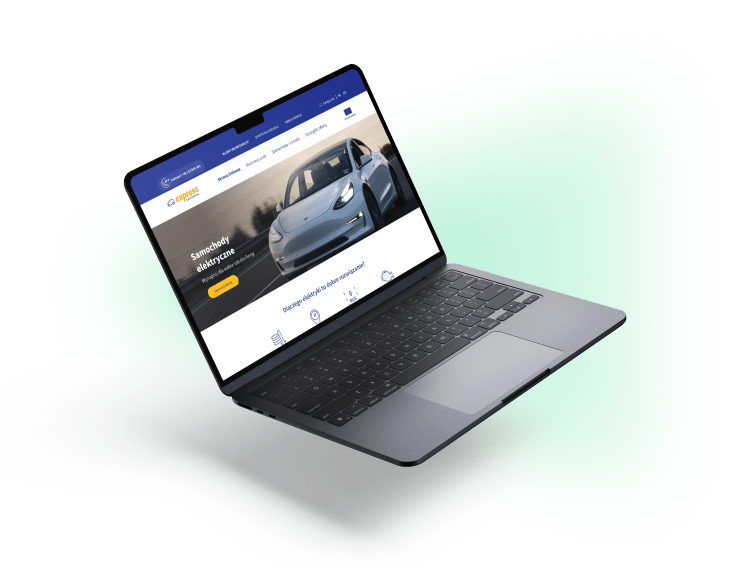
The work began with the development of the new website based on designs and mockups delivered by an external consulting firm. Core Logic carried out detailed analysis and consultations, and then proposed improvements aimed at increasing intuitiveness and enhancing the user journey, especially on mobile devices. As a result, online reservations became simpler, and the process of selecting a car, location, dates, and additional options became smoother and more intuitive, without unnecessary steps.
At the same time, special attention was given to the flow of data between the website and external systems. This made it possible to present real-time information about vehicle availability and display pricing aligned with selected configurations. The platform was designed with a user-friendly interface and a clearly structured flow so that customers could complete bookings quickly on a mobile device, desktop computer, or tablet.
The key integration involved the exchange of data with an external Reservation Management System (RMS), which supplied the website with information about cars, reservations, pick-up and drop-off locations, and dependencies between locations. Thanks to this, the reservation engine could present essential information clearly and quickly, allowing customers to reserve a vehicle at the chosen place and time.
As part of the platform, additional elements were implemented to increase booking confidence, such as transparent summaries, confirmations, and notification mechanisms that reduced the number of customer questions during the rental process. The redesign of the website culminated in Express being recognized by Gazeta Finansowa for implementing a modern online car rental platform. This distinction highlighted the core strengths of the solution: performance, security, and a refined digital rental experience.
From a broader digital and performance perspective, the website could also support tools such as Google Analytics to better understand how users discover offers, move through the booking journey, and interact with the brand across digital channels. This type of insight is important in a modern car rental business, where the quality of the digital funnel directly influences revenue, conversion, and service quality.

CMS supporting vehicle rental operations
For Express, Core Logic also developed a modern CMS built in Java and ReactJS to support key processes within the vehicle rental organization. The system served as a central tool for managing users, customers, offers, promotions, discounts, documents, and payments, as well as supporting reservation handling and booking administration.
This allowed employees to manage their daily work in one place, while processes related to reservations, settlements, and customer service became more structured and easier to handle. The CMS also improved fleet operations in terms of offer visibility, the presentation of available vehicles, and control over rental parameters, including seasonal pricing rules.
In practical terms, the CMS became an essential part of the company’s software environment. It supported internal business operations, improved transparency, and gave the team the tools needed to oversee the daily work of a large fleet operation. Because the system centralized data, pricing logic, offers, and booking-related activities, many tasks could be managed more efficiently within one environment.
It also supported both front-office and back-office teams by providing a flexible environment for managing daily rental operations. For a growing rental business, this kind of integrated system is critical to maintaining consistency, reducing administrative effort, and improving decision-making.

Email offer management
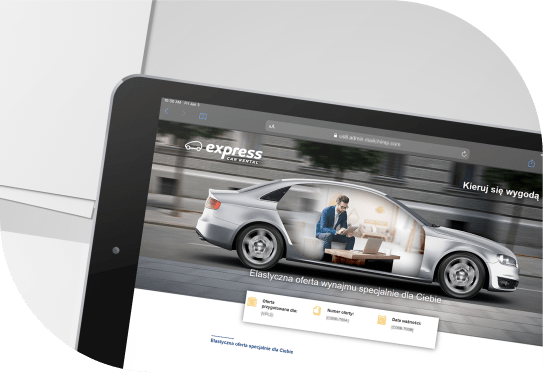
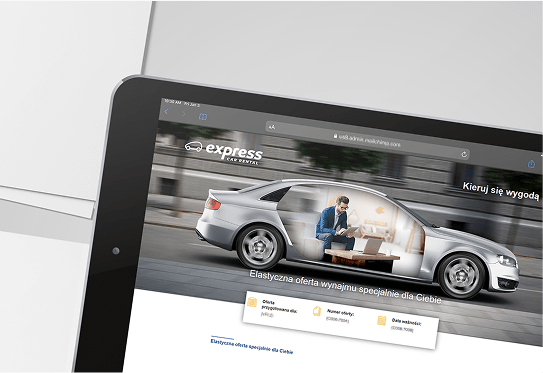
Analysis showed that selecting the optimal rental offer could be demanding, especially for B2B clients and repeat customers, who expected a more personalized approach and additional service options. In response, Express, working with Core Logic and using an external CRM system, developed an email offer module that made it possible to configure more tailored rental offers for each client.
This solution supported consistent communication, enabled faster responses to inquiries, and improved service quality when helping customers choose a car, rental period, and contract parameters. It also gave the company more control over how offers were created, presented, and followed up.
In a large vehicle rental business, this kind of functionality increases commercial flexibility and improves the way teams respond to more complex rental scenarios. It is particularly valuable where B2B clients, long-term contracts, and custom terms require more flexibility than a standard self-service booking flow can provide.
Problems
The most important issue was the previous platform, which had stopped meeting business expectations. From the customer’s perspective, the core reservation process was no longer intuitive, while limited performance negatively affected user handling and booking completion rates. According to employees, the visual layer also no longer met modern standards, which reduced customer satisfaction and made further development more difficult.
There was also a lack of tools enabling rapid changes to offers, seasonal pricing, or payment handling, which in the car rental market had become a necessity. Without modern software, it became increasingly difficult to respond quickly to changing commercial requirements, manage promotional logic, and support a growing fleet with the required speed and quality.
These limitations affected not only the customer-facing website, but also internal processes, operational efficiency, and the company’s ability to scale the business in a cost-effective way.
Challenges
The biggest challenge was integration with the Reservation Management System. The RMS API was extensive, and raw data from that system was used in complex business processes that required substantial transformation of data models. Making effective use of that information required specialist knowledge and detailed analysis so that the platform could present vehicle availability, pick-up and drop-off locations, dependencies between locations, and rental parameters in a way that was clear to the customer.
The network of pick-up points also formed a broad operational structure, and the website had to aggregate and display that information in a way that made the booking process quick and simple, including situations where the customer selected different pick-up and drop-off locations. Another challenge was ensuring consistent handling of payments, including online payments, as well as notification mechanisms that support the customer before pick-up and during the rental period, for example through reminders about dates, contracts, terms, or return conditions.
From a technology perspective, the platform also had to function properly across many use cases, devices, and booking scenarios. The objective was not only to build a visually modern platform, but also to deliver a reliable solution capable of supporting scale, speed, and operational stability in a demanding market.

Results
- A new website was created, enabling convenient and intuitive online reservations and a fast booking process from any location and on any device.
- A CMS tailored to Express’s business needs was delivered, supporting bookings, payments, documents, offers, discounts, and the daily work of employees within one environment.
- Integration with the RMS was completed, enabling the real-time presentation of key data about vehicles and reservations, which improved fleet visibility, increased operational efficiency, and enhanced customer service quality.
- Ongoing maintenance of the IT infrastructure and system security was ensured, improving the operational efficiency of the rental company.
- More broadly, the implemented software created a scalable digital foundation for the car rental business, combining customer-facing booking flows with operational support for internal teams.
- The new environment gave Express a modern technology stack with the key features needed by contemporary rental operators: fast booking flows, responsive interfaces, integrated payments, better control over offers and fleet visibility, and improved support for long-term growth.
- The platform also created room for future expansion into adjacent mobility areas such as car sharing, as well as potential integration patterns similar to those used in other scalable booking platforms.
- In a competitive market, modern digital solutions give rental brands the ability to improve speed, reduce operational costs, grow revenue, and provide high-quality service to both individual customers and corporate clients.